
Profitable on Paper, Broke in Real Life

When I was in my early twenties, my first company, a landscape design-build firm, crossed $1 million in annual revenue. Then $2 million. Then $3 million and beyond. From the outside, it probably looked like things were working. And in some ways, they were. We were growing. We were winning work. We were building something real. But here's what was actually happening behind the scenes.
Every few months, I'd get financial statements from my CPA. I'd look at the income statement and understand the basics. Revenue meant sales. The bottom line meant profit. Fine. But the balance sheet? I had no idea what it was really telling me. Assets, liabilities, equity. Sure, those words were on the page. But what were they actually communicating about the health of my business? I couldn't connect them to anything I was experiencing in real life. Honestly, the only number I ever focused on was the cash balance, and even that wasn't useful because the statements were already weeks or months old by the time they landed on my desk.
So I was left with this persistent, nagging disconnect. I'd look at the income statement showing a positive profit, and at the very same time, I was tapping into my line of credit just to make payroll that week. How does that work? How can a business show profit on paper while the owner's quietly scrambling for cash in real life? I didn't have an answer. It frustrated me deeply. And honestly, it cost me more than I'll ever be able to calculate.
Looking back, I left a significant amount of money on the table during those years. Not because I wasn't working hard. I was grinding. Not because I didn't care about the business. It consumed me. But because I didn't understand the levers in my business. The specific things I could've pulled with precision and intention to move the needle. If I'd truly understood those levers, how to sequence them, and how to act on them with clarity instead of gut instinct, I could've done the same amount of work, shed the same amount of tears, maybe fewer, and had a lot more to show for it. More time with the people I love. Better returns. Less stress. A business that worked harder for me instead of the other way around.That realization has never left me.
Fast forward more than twenty years and I've spent what most people would consider an unreasonable amount of time trying to close that gap. Undergraduate degree in accounting and finance. Master's in accounting. CPA license. Years working in public accounting. An MBA from the Fuqua School of Business at Duke University. Add it all up, and the total education is probably equivalent to what a doctor goes through. I don't say that to brag. Honestly, it's more likely evidence that I'm a slow learner than anything else. But here's my point, and this is the part that matters. You don't need to do any of that.
I recently started training Jiu Jitsu. I'm still a white belt. I get choked out. I get submitted. I tap more times in a single session than I care to admit to anyone who knows me. And I've accepted the reality that earning a black belt takes eight to ten years on average. There's no shortcut. You can't compress a decade of mat time into two years, no matter how hard you train or how many instructional videos you watch. The body and the mind need time to catch up. That's just the nature of the sport. Finance isn't the same.
I've worked with business owners who couldn't read a basic income statement when we first met. Zero financial background. No formal training. In some cases, they'd been running their companies for years and still couldn't tell you the difference between cash and profit, or why those two things are often very different numbers. And yet, within just a few months of working through the financials together, using a clear system with the right KPIs, regular forecasts, and a straightforward map of the levers that actually drive results in their business, something clicked. They started speaking the language of money. Not perfectly at first, but fluently enough to make better decisions, ask sharper questions, and lead their teams with a confidence they didn't have before.
It's not an eight-year journey. It doesn't require a master's degree or a CPA license. It requires the right framework, the right tools, and consistent repetition. That's it.
One leader I work with illustrated this better than I ever could with a story or an analogy. About a year ago, he was regularly confusing revenue and profit in our meetings. Not occasionally. Regularly. He'd use the terms interchangeably, essentially guessing when it came to the numbers, and everyone in the room knew it, including him. Fast forward to last month. I asked someone on his executive team to walk the group through free cash flow on the whiteboard, starting from revenue and working all the way down. Without hesitation, he stood up, grabbed the marker, and did the entire breakdown flawlessly. Every line item. Every connection. Every implication. The room was quiet for a moment when he finished. Not because it was surprising that someone could do it, but because it was him.
That's what financial literacy looks like when it actually takes hold. And that transformation didn't take years. It took the right system and the commitment to use it.
People ask me all the time how they can get better with their finances. How they can finally understand what the numbers are telling them. How they can stop feeling like a passenger in their own business and start making decisions with real confidence. Last year, I made my Financial Pro course completely free in response to that exact question. You can access the full program at coltivar.com/byfiq. It covers the fundamentals in a way that's practical, direct, and built for business owners, not accountants.
But I also know that not everyone has fifty hours to work through a full course. Life's busy. Businesses don't slow down while you're trying to learn. So I built something faster, something more accessible, something that could reach not just the owner but everyone on the team.
Today, I'm announcing the launch of my new book, Boosting Your Financial IQ: The Blueprint for Building a Valuable $100M Company.
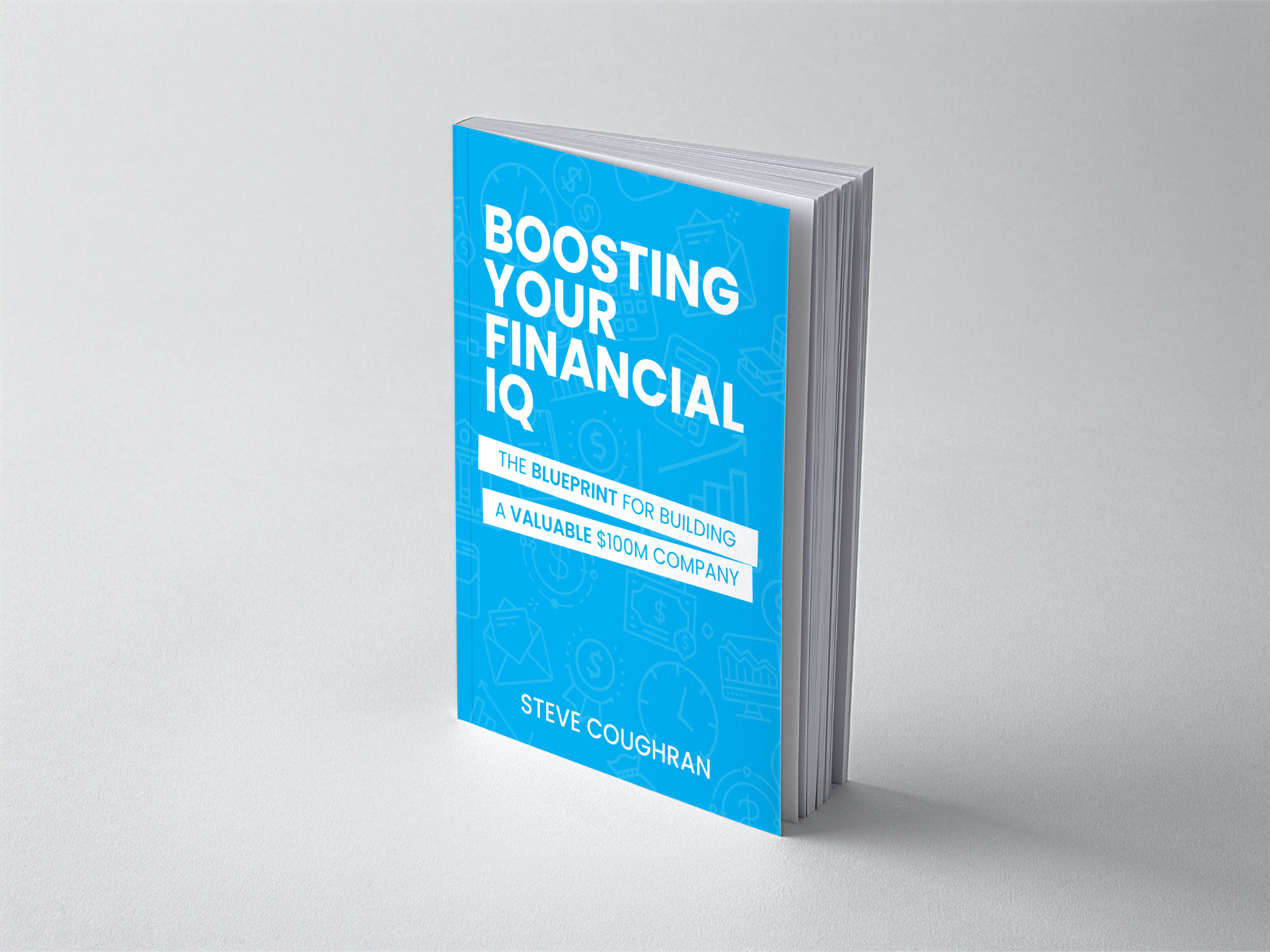
This isn't a textbook and it's not written for CFOs or finance professionals who already know this material. It's written for the business owner who felt exactly the way I felt in my twenties, staring at a financial statement that meant nothing to them while their gut was telling them something was wrong. It's written for the sales rep who doesn't realize how their discounting habits affect the company's margins. For the operations manager who doesn't see the connection between project timelines and cash flow. For the HR leader who thinks finance belongs in someone else's department.
Here's the truth. Everyone in your organization makes decisions every single day that affect the financial performance of the business. Every single one of them. And when your whole team understands what drives value, what moves the levers, and what the numbers are actually saying, everything changes. Decisions get sharper. Accountability deepens. Results improve.
If you ever wished someone had handed you a map earlier in your journey, this is it. Cheers.