
How to Build a Business Strategy That Actually Works
Building a business is hard. Really hard. So why do so many smart, hardworking, and ambitious people make it so much harder than it needs to be?
For nearly two decades I've worked with hundreds of companies, and one of the biggest struggles leaders face is creating a clear and simple strategy to guide their teams and win in the market. In a Coltivar survey of 585 business leaders, over 76% said they don't have a clear enough strategy to guide their organization and earn above-average returns. And yet, most of them keep pouring in more time, more energy, and more capital, convinced that if they just work harder and smarter, things will eventually turn around. They rarely do.
The reason isn't effort. It's the approach. Most leaders default to what I call the business approach to strategy. They get their team in a room, cast an exciting vision for the future, build a list of initiatives or rocks or objectives, and then get back to executing. It feels productive. Checking things off a list gives us a dopamine rush, and honestly it can become addictive. But activity isn't strategy. And staying busy is one of the most effective ways to avoid confronting the real problem holding your business back.
I prefer the scientific approach. And it starts with a simple but uncomfortable question: what is the number one constraint holding this business back from its true potential?
I call this the strategic problem. And before a company does anything else, before the vision casting, before the planning sessions, before the initiative lists, it needs to define this clearly. Because if you don't know what problem you're trying to solve, you have no way of knowing what winning even looks like. Most leaders skip this step because it's the hard part. It requires honest conversation about what's actually wrong in the business. So instead they jump straight to the fun part, dreaming about the future, and the real problem never gets addressed.
Once the strategic problem is defined, a company can work through what we call the 4-Box Framework, with the customer at the center of every decision. Because that's what strategy ultimately comes down to: serving your customer in a unique and valuable way so they choose you over every other alternative available to them.
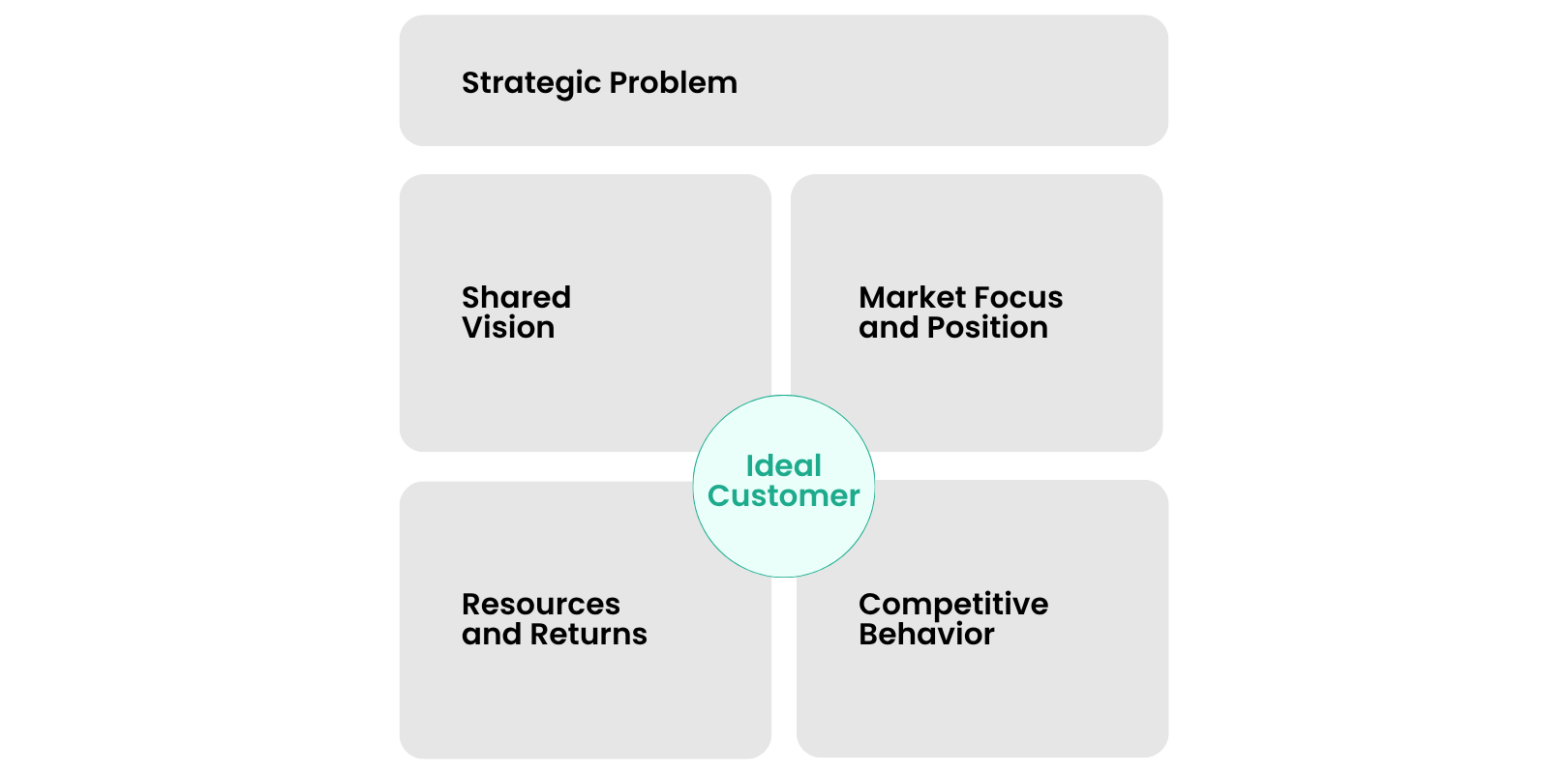
The first box is shared vision. This is where you define what winning looks like, not just for the company but for your customers, your team, your suppliers, and your stakeholders. What's the purpose behind what you're building? At Coltivar, we only get into shared vision after the strategic problem is defined, because the vision needs to be shaped by the reality of where the business stands today, not by where we wish it were.
The second box is market focus and position. This is where you get specific about who your ideal customer is, how you're positioning yourself in the market, through what channels, in what geographies, and at what stage of the value chain. One trap to avoid here is simply listing where you currently compete instead of genuinely thinking through where you could compete to earn healthy margins and strong returns on invested capital. Those are two very different exercises, and confusing them is one of the most common and costly mistakes I see.
The third box is competitive behavior, meaning how your company competes. Once you know who you're serving and where you're playing, you need to decide how you'll design your business around your generic strategy. Are you pursuing differentiation, meaning customers choose you because of the unique value you deliver? Are you pursuing cost leadership, meaning you can deliver a comparable product or service at a lower cost than anyone else? Or are you pursuing a focus strategy, concentrating on a narrow segment where you can do one of those two things exceptionally well? A lot of companies try to do all three and end up winning at none of them.
Part of deciding how you compete is designing the operating model that supports it. Which activities are essential? Which can be eliminated? Which can be optimized, automated, or enhanced with AI? The goal is an operating model that keeps your cost structure lean, your fulfillment strong, and your customer experience consistently excellent. Most companies never think about this deliberately, and it shows in their results.
Finally, before you commit to any strategic direction, you need to identify what resources are required to make this strategy a reality. This includes the skills, capabilities, technology, and capital necessary to execute it well. From there, model out the expected returns. Whether you're using ROIC, free cash flow, or another measure appropriate for your business, you need to see what the financial outcome looks like on paper before you take it to the market. A good strategy should be desirable, practical to execute, and economically sound for your business. If it checks all three, you have something worth going out and validating.
The point is that strategy should follow a process. Not a different framework every year. Not a new consultant with a conflicting methodology. Not a vision day that produces an exciting deck and changes nothing. A repeatable system that helps you define the problem, design the solution, and measure whether it's working. That's what separates companies that keep growing from the ones that stay stuck.
If you want to talk through your strategy and learn more about how this approach works in practice, reach out at coltivar.com. Cheers.