
How Long Does It Take to Sell a Business?

If you’re thinking about selling your business someday, the most important thing to understand is this: the sale doesn’t start when you find a buyer—it starts years earlier.
The question isn’t just how long does it take to sell a business?
It’s how long does it take to build a business someone actually wants to buy?
For most owners, that timeline is measured in years—not months. Not because the paperwork takes forever, but because preparing your business for sale means transforming it into a machine that runs without you, with clean numbers, solid cash flow, clear roles, and repeatable processes.
This article unpacks what actually affects your timeline, why most businesses aren't ready when they hit the market, and how to start preparing—long before you're ready to exit.
Key Takeaways
-
Selling your business usually takes 1–2 years, but preparing it for sale can take 3–5 years
-
Buyers want clarity, systems, and cash flow—not just strong revenue
-
Most sale delays are caused by owner dependence, poor financials, or missing documentation
-
Businesses that run without the owner—and show clean performance data—sell faster and for more
-
Start building your business to sell well before you're ready to leave.
The Timeline Buyers Never See
When owners ask how long does it take to sell a small business, they’re usually thinking about the final step—the listing, the offer, the negotiation.
But buyers don’t just want to see revenue or a strong client list. They want a company that runs without chaos. That takes time to build.
Buyers want reliable financial records. They want to see how jobs or projects are estimated, sold, delivered, and managed—without the owner making every decision. They want to know how cash flows, how labor is tracked, how performance is measured, and whether the team will stay after the owner steps away.
Those aren’t things you can fix in a few months. They take years to build the right way.
What Makes Buyers Hesitate
One of the top reasons businesses don’t sell—or sell for less—is because the owner is still the engine behind everything. They’re the main salesperson, the chief estimator, the one holding the relationships and making the calls. That creates risk. And risk reduces value.
Other common issues that slow things down:
-
Financials that are built for tax savings, not transparency
-
Job costing that’s inconsistent or buried in spreadsheets
-
A team that’s loyal to the owner, not the business
-
No clear roles, SOPs, or reporting rhythm
-
Cash flow that’s choppy or unpredictable
If a buyer can’t see how the business works—or how it works without you—they either back out or discount the price.
Why Preparation Takes Time
If you're searching how to prepare a business for sale, you’ll find a lot of checklists. But most skip the part that matters most: the transformation.
Preparing your business to sell isn’t just about organizing documents. It’s about building a real company, not just a personal hustle with overhead.
Here’s what takes time:
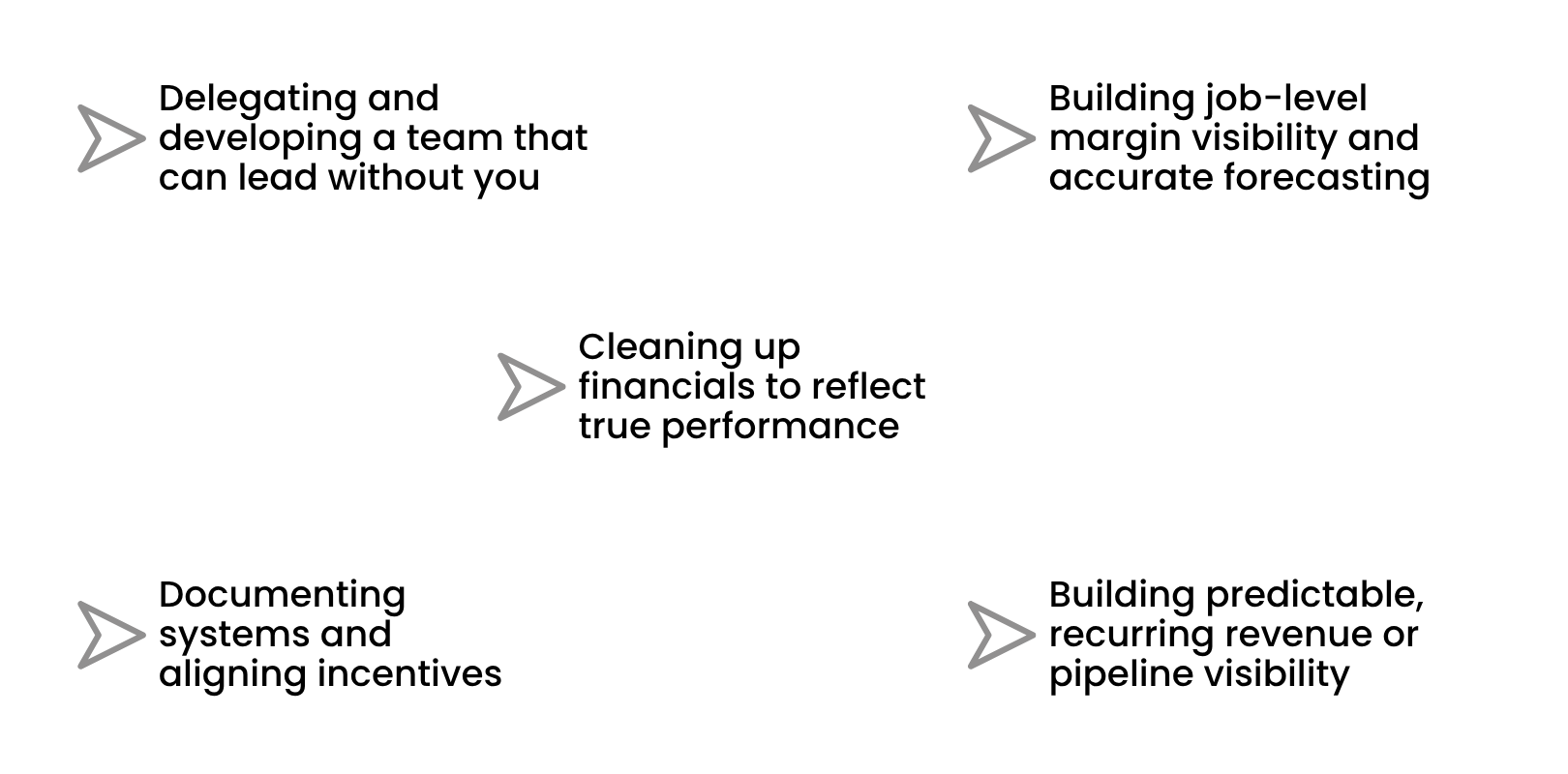
These aren't one-and-done tasks. They're habits you build over time, often while still running the day-to-day.
When to Start (If You Want a Good Outcome)
The real answer to when should I start preparing to sell my business is: years before you think you’ll need to.
A 3–5 year runway gives you space to fix issues, test systems, and prove performance. It gives you time to pull yourself out of the weeds and build something someone else can actually own.
And if you're not planning to sell? That's fine too. A business that's built to sell is also easier to scale, step away from, or pass down.
The point isn't to rush a sale. It's to build a business that's worth buying—whether you sell next year or never.
The Sale Is the Reward, Not the Fix
You don’t sell a business to get it in order. You get it in order so you can sell it.
If you want top dollar, you need to start running your business like it’s already on the market—clean financials, clear systems, strong margins, and a team that executes without you.
The sale will come when the business is ready. And getting ready takes time.
Want to know if your business is built to sell, or what’s missing?
Book a free strategy call and let’s walk through where your business stands today—and what it’ll take to make it truly worth buying.